Further Ventures Debuts in Athens at the Opening of Posidonia Weekend
New Greek-anchored think tank initiative for maritime leadership draws a full house to an unfiltered conversation on who owns the consequences of AI-influenced decisions in shipping
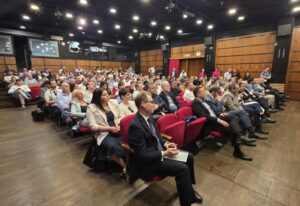
ATHENS — Further Ventures, a new think tank style initiative being built in Greece for and with maritime leadership, marked its first public expression on Friday, May 29, at the Hellenic American Union, drawing a full house of commercial shipping industry operators on the day Panathēnea closed and Posidonia weekend began.
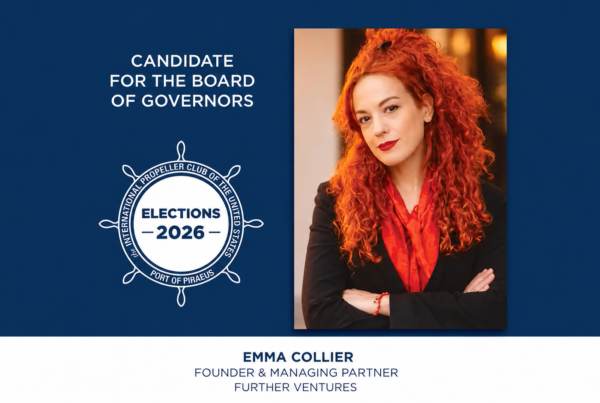
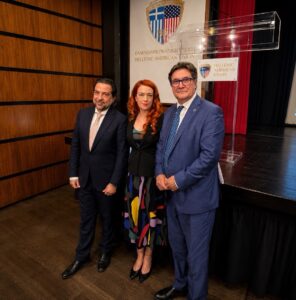
Held under the auspices of the Hellenic Chamber of Shipping and supported by the Association of Banking and Financial Executives of Hellenic Shipping, the first expression opened with remarks from George Alexandratos, President of the Hellenic Chamber of Shipping; Costis Frangoulis, President of the International Propeller Club Port of Piraeus and Founder and CEO of Franman; and Akis Tsirigakis, Founder and CEO of Stellar V Capital Corp and co-CEO of Nautilus Energy Management, all of whom remained in the room well into the session that followed. They were joined in opening the day by Emma Collier, Founder and Managing Partner of Further Ventures and the force behind the initiative, and George Xiradakis, co-founder of Further Ventures and President of the Association of Banking and Financial Executives of Hellenic Shipping.
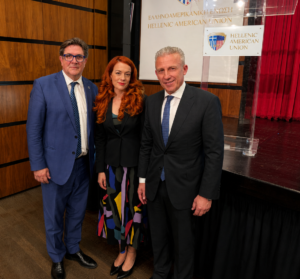
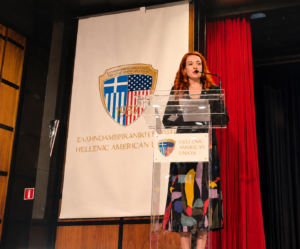
Collier opened with the question: “Who owns the consequences of AI-influenced decisions?” Then the unpacking. “Who defines what good looks like, where these systems are used, whether they are actually working, and who steps in when they are not.”
She offered the room a different mental model for what they are dealing with. “AI is a strategic hire, not a tool. When you call AI a tool, you import a whole set of assumptions about how tools behave. Tools tend to do the same things every time. They don’t learn, and you don’t onboard a hammer. The word tool tells the brain this is a static, bounded, predictable thing, and that mental model is precisely wrong for a system that is probabilistic and context-sensitive.” The framing was carried into Splash 247’s “Inside shipping’s AI bubble” feature shortly after.
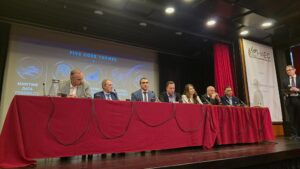
After the opening remarks, the event moved into a fireside chat between Stylianos Papageorgiou of Lomar Labs and Nikolas Pyrgiotis of Signal Ventures, then into the unfiltered, unscripted, symposium-style conversation the room had been promised across five themes: Maritime Data Possibility, AI as a Strategic Hire, Investing Into Maritime, Geopolitics, Geoeconomics & AI, and The Human Element Evolves. The open panel, moderated by Collier and Robin Russel, CEO of Satva Trust, moved fluidly between data, strategy, investment, geopolitics, and the human dimension, with the room steering the direction as much as the panelists. On the panel: Mike Konstantinidis (Further & Further, VP Corum Group), Vasilis Mouyis (Doric Shipbrokers), Dr. Athanasios Platias (University of Piraeus), Peter Schellenberger (LEDGID, Novomaxis), Alketas Drosos (EOS Marine), Monica Polemitis (TKI), and Yannis Pastellas (Deep Wave Maritime Technologies Group).
That question of ownership ran through the panel. Konstantinidis brought it back to the discipline required inside companies: “AI is changing how maritime software gets built, but it still needs a captain. The real value comes when a domain owner can turn operational friction into clear use cases, measurable outcomes, and adoption. Without that ownership, speed becomes another source of fragmentation.”
The clearest measure of how the room received it came from what attendees wrote afterward. Luis Benito of Wallem Group described the conversation as “Provocative. Refreshing. Insightful. Brave. Determined. Real,” closing with “Exciting. Refreshing. Hopeful.” He captured “a full house speaking openly and honestly about the AI Revolution, as one of the speakers baptised it.” Among the lines he carried away from the room: “Maritime survives all revolutions because it adapts, reads the environment well, and is able to make good judgement under uncertainty.” “This moment is not simply about software, but leadership capacity.” “Tech without accountability becomes organised irresponsibility.” “Institutional readiness is not moving at the same pace as technology development.” “Industries collapse when leadership fails to think alongside the technology.” “At Greek shipping, we have desire, and with desire comes creativity, and the use of creativity generates supremacy.”
Konstantina Maltezou, who attended, framed it as “a data and people problem. Shipping doesn’t have an AI problem. It has a decades-old institutional problem that AI is now putting under a spotlight.” Darcey Stickley of The Mission to Seafarers called it “a frank discussion on the future of shipping technology and how companies are choosing to invest, all set within the historic Hellenic American Union building.” Evangelos Boulougouris of the University of Strathclyde noted the substance of the discussions on maritime tech, AI, and the investment landscape required to support both.
Further Ventures is anchored in Athens by design. Greek shipping represents over twenty percent of the global fleet, and the concentration of maritime decision-makers, capital, and operational experience already exists in the city. The initiative will move forward as a recurring membership-based body, with the next sessions to be announced. Throughout Posidonia week, attendees and others who had heard about the first expression approached the founders about taking part in what comes next.
“Making the conversation onstage worth engaging with rather than just attending was the point,” Collier said. “This is how we know it works.”
Co-founder George Xiradakis, well known in maritime leadership circles for his charisma, summed it up afterward: “This was just the beginning of this new journey. You will not want to miss the continuation.”
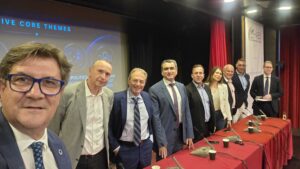
Further Ventures is founded by Emma Collier, George Xiradakis, Mike Konstantinidis, Christiana Aristidou, and Dimitris Orfanos.
About Further Ventures
A new think tank style initiative being built in Greece for and with maritime leadership. Venture in the original sense, a bold undertaking. Unfiltered, unscripted entrepreneur-to-entrepreneur conversation that arrives at clarity on how to govern, map, measure, and manage AI inside the company, with equal participation between panelists and the room. Built to separate signal from noise rather than add to it.
Media Contact
Emma Collier
Founder and Managing Partner, Further Ventures
emma@further.consulting
Το Further Ventures κάνει το ντεμπούτο του στην Αθήνα στα προεόρτια των Ποσειδωνίων
Μια νέα πρωτοβουλία τύπου think tank με έδρα την Ελλάδα, απευθυνόμενη στη ναυτιλιακή ηγεσία, γέμισε την αίθουσα με μια ανοιχτή συζήτηση γύρω από το ερώτημα: ποιος έχει την ευθύνη για τις συνέπειες των αποφάσεων που επηρεάζονται από την τεχνητή νοημοσύνη στη ναυτιλία;
ΑΘΗΝΑ — Το Further Ventures, μια νέα πρωτοβουλία τύπου think tank που χτίζεται στην Ελλάδα, για και μαζί με τη ναυτιλιακή ηγεσία, σηματοδότησε την πρώτη του δημόσια έκφραση την Παρασκευή 29 Μαΐου, στην Ελληνοαμερικανική Ένωση, με κατάμεστη αίθουσα από στελέχη του κλάδου της εμπορικής ναυτιλίας, την ημέρα που έκλεινε το Panathēnea και άνοιγε το Σαββατοκύριακο των Ποσειδωνίων.
Υπό την αιγίδα του Ναυτικού Επιμελητηρίου της Ελλάδος και με την υποστήριξη του Συνδέσμου Τραπεζικών και Χρηματοοικονομικών Στελεχών της Ελληνικής Ναυτιλίας, η εκδήλωση άνοιξε με χαιρετισμούς από τον Γεώργιο Αλεξανδράτο, Πρόεδρο του Ναυτικού Επιμελητηρίου της Ελλάδος, τον Κωστή Φραγκούλη, Πρόεδρο του International Propeller Club Port of Piraeus και Ιδρυτή και CEO της Franman, και τον Άκη Τσιριγκάκη, Ιδρυτή και CEO της Stellar V Capital Corp και συν-CEO της Nautilus Energy Management, οι οποίοι παρέμειναν στην αίθουσα και κατά τη διάρκεια της συνεδρίας που ακολούθησε. Στους χαιρετισμούς συμμετείχαν επίσης οι συνιδρυτές του Further Ventures: η Emma Collier, Founder και Managing Partner του Further Ventures και η κινητήρια δύναμη της πρωτοβουλίας, και ο Γιώργος Ξηραδάκης, συνιδρυτής του Further Ventures και Πρόεδρος του Συνδέσμου Τραπεζικών και Χρηματοοικονομικών Στελεχών της Ελληνικής Ναυτιλίας.
Η Collier άνοιξε με το ερώτημα: «Ποιος έχει την ευθύνη για τις συνέπειες των αποφάσεων που επηρεάζονται από την AI;» Και ακολούθησε η ανάλυση. «Ποιος ορίζει τι θεωρείται καλό αποτέλεσμα, πού χρησιμοποιούνται αυτά τα συστήματα, αν λειτουργούν πράγματι, και ποιος παρεμβαίνει όταν δεν λειτουργούν.»
Πρότεινε στην αίθουσα ένα διαφορετικό νοητικό μοντέλο για αυτό που έχουν να αντιμετωπίσουν. «Η AI είναι μια στρατηγική πρόσληψη, όχι ένα εργαλείο. Όταν αποκαλείς την AI εργαλείο, εισάγεις ένα ολόκληρο σύνολο παραδοχών για το πώς συμπεριφέρονται τα εργαλεία. Τα εργαλεία τείνουν να κάνουν τα ίδια πράγματα κάθε φορά. Δεν μαθαίνουν, και δεν εντάσσεις ένα σφυρί στην ομάδα. Η λέξη “εργαλείο” υποδηλώνει κάτι στατικό, οριοθετημένο και προβλέψιμο, και αυτό το νοητικό μοντέλο είναι ακριβώς λάθος για ένα σύστημα που είναι πιθανοκρατικό και εξαρτώμενο από το πλαίσιο.» Η ίδια προσέγγιση αποτυπώθηκε λίγο αργότερα στο άρθρο του Splash 247 με τίτλο “Inside shipping’s AI bubble”.
Μετά τους χαιρετισμούς, ακολούθησε ένα fireside chat μεταξύ του Στυλιανού Παπαγεωργίου από τη Lomar Labs και του Νικόλα Πυργιώτη από τη Signal Ventures, και στη συνέχεια η ανοιχτή, χωρίς σενάριο, symposium-style συζήτηση που είχε υποσχεθεί στους παρευρισκόμενους, γύρω από πέντε θεματικές: Maritime Data Possibility, AI as a Strategic Hire, Investing Into Maritime, Geopolitics, Geoeconomics & AI, και The Human Element Evolves. Το ανοιχτό πάνελ, που συντόνισαν η Emma Collier και ο Robin Russel, CEO της Satva Trust, κινήθηκε μεταξύ δεδομένων, στρατηγικής, επένδυσης, γεωπολιτικής και της ανθρώπινης διάστασης, με την αίθουσα να καθορίζει την κατεύθυνση εξίσου με τους ίδιους τους ομιλητές. Στο πάνελ συμμετείχαν: Mike Konstantinidis (Further & Further, VP Corum Group), Βασίλης Μούγης (Doric Shipbrokers), Δρ. Αθανάσιος Πλατιάς (Πανεπιστήμιο Πειραιώς), Peter Schellenberger (LEDGID, Novomaxis), Αλκέτας Δρόσος (EOS Marine), Monica Polemitis (TKI) και Γιάννης Παστέλλας (Deep Wave Maritime Technologies Group).
Το ερώτημα της ιδιοκτησίας και της ευθύνης διαπέρασε όλη τη συζήτηση. Ο Mike Konstantinidis το επανέφερε στην πειθαρχία που απαιτείται μέσα στις ίδιες τις εταιρείες: «Η AI αλλάζει τον τρόπο με τον οποίο χτίζεται το ναυτιλιακό λογισμικό, αλλά εξακολουθεί να χρειάζεται ηγεσία. Η πραγματική αξία προκύπτει όταν ένας domain owner μπορεί να μετατρέψει την επιχειρησιακή τριβή σε σαφείς εφαρμογές χρήσης, μετρήσιμα αποτελέσματα και πραγματική υιοθέτηση. Χωρίς αυτή την ιδιοκτησία, η ταχύτητα γίνεται απλώς άλλη μία πηγή κατακερματισμού.»
Η σαφέστερη ένδειξη του πώς υποδέχτηκε η αίθουσα τη συζήτηση ήρθε από όσα έγραψαν οι παρευρισκόμενοι μετά την εκδήλωση. Ο Luis Benito από τη Wallem Group χαρακτήρισε τη συζήτηση «Προκλητική. Αναζωογονητική. Διορατική. Τολμηρή. Αποφασιστική. Αληθινή», κλείνοντας με «Συναρπαστική. Αναζωογονητική. Ελπιδοφόρα». Κατέγραψε «μια κατάμεστη αίθουσα που μιλούσε ανοιχτά και ειλικρινά για την Επανάσταση της Τεχνητής Νοημοσύνης, όπως τη βάφτισε ένας από τους ομιλητές». Ανάμεσα στις φράσεις που πήρε μαζί του από την αίθουσα: «Η ναυτιλία επιβιώνει σε όλες τις επαναστάσεις γιατί προσαρμόζεται, διαβάζει σωστά το περιβάλλον και κρίνει σωστά υπό συνθήκες αβεβαιότητας». «Αυτή η στιγμή δεν αφορά απλώς το λογισμικό, αλλά την ικανότητα ηγεσίας». «Η τεχνολογία χωρίς λογοδοσία γίνεται οργανωμένη ανευθυνότητα». «Η θεσμική ετοιμότητα δεν κινείται με τον ίδιο ρυθμό με την εξέλιξη της τεχνολογίας». «Οι κλάδοι καταρρέουν όταν η ηγεσία αποτυγχάνει να σκέφτεται μαζί με την τεχνολογία». «Στην ελληνική ναυτιλία έχουμε επιθυμία, και η επιθυμία γεννά τη δημιουργικότητα, και η δημιουργικότητα γεννά την υπεροχή.»
Η Konstantina Maltezou, η οποία επίσης παρακολούθησε την εκδήλωση, το χαρακτήρισε «πρόβλημα δεδομένων και ανθρώπων. Η ναυτιλία δεν έχει πρόβλημα AI. Έχει ένα δεκαετιών θεσμικό πρόβλημα που η AI φέρνει τώρα στο φως.» Η Darcey Stickley από τη Mission to Seafarers το χαρακτήρισε «μια ειλικρινή συζήτηση για το μέλλον της ναυτιλιακής τεχνολογίας και τον τρόπο με τον οποίο οι εταιρείες επιλέγουν να επενδύσουν, στο ιστορικό κτίριο της Ελληνοαμερικανικής Ένωσης.» Ο Ευάγγελος Μπουλουγουρής από το University of Strathclyde σχολίασε την ουσία των συζητήσεων γύρω από τη ναυτιλιακή τεχνολογία, την AI και το επενδυτικό τοπίο που απαιτείται για να τις στηρίξει.
Η επιλογή της Αθήνας ως έδρας του Further Ventures δεν είναι τυχαία. Η ελληνική ναυτιλία αντιπροσωπεύει πάνω από το 20% του παγκόσμιου στόλου, και η συγκέντρωση ναυτιλιακών στελεχών που λαμβάνουν αποφάσεις, κεφαλαίου και επιχειρησιακής εμπειρίας υπάρχει ήδη στην πόλη. Η πρωτοβουλία θα προχωρήσει ως ένας επαναλαμβανόμενος θεσμός με μοντέλο συνδρομής, με τις επόμενες συνεδρίες να ανακοινωθούν σύντομα. Σε όλη τη διάρκεια της εβδομάδας των Ποσειδωνίων, συμμετέχοντες και άλλοι που είχαν ακούσει για την πρώτη έκφραση προσέγγισαν τους ιδρυτές για συμμετοχή σε ό,τι έρχεται στη συνέχεια.
«Στόχος ήταν η συζήτηση επί σκηνής να αξίζει την ενεργή συμμετοχή, όχι απλώς την παρακολούθηση», δήλωσε η Collier. «Έτσι ξέρουμε ότι λειτουργεί.»
Ο συνιδρυτής Γιώργος Ξηραδάκης, γνωστός στους κύκλους της ναυτιλιακής ηγεσίας για τη χαρισματική του παρουσία, το συνόψισε μετά την εκδήλωση: «Αυτό ήταν μόλις η αρχή ενός νέου ταξιδιού. Δεν θα θέλετε να χάσετε τη συνέχεια.»
Ιδρυτές του Further Ventures είναι η Emma Collier, ο Γιώργος Ξηραδάκης, ο Mike Konstantinidis, η Christiana Aristidou και ο Δημήτρης Ορφανός.
Σχετικά με το Further Ventures Μια νέα πρωτοβουλία τύπου think tank που χτίζεται στην Ελλάδα, για και μαζί με τη ναυτιλιακή ηγεσία. Venture με την αρχική του έννοια, ως ένα τολμηρό εγχείρημα. Ανοιχτή, χωρίς σενάριο συζήτηση από επιχειρηματία σε επιχειρηματία που καταλήγει σε σαφήνεια ως προς τον τρόπο διακυβέρνησης, χαρτογράφησης, μέτρησης και διαχείρισης της AI εντός της εταιρείας, με ισότιμη συμμετοχή ανάμεσα στους ομιλητές και την αίθουσα. Σχεδιασμένο για να διαχωρίζει το σήμα από τον θόρυβο, και όχι για να προστίθεται σε αυτόν.
Επικοινωνία με ΜΜΕ Emma Collier Founder and Managing Partner, Further Ventures emma@further.consulting